

We would like you to express your opinion on our new design.

 IPitomy
Smarter Business Communications
IPitomy
Smarter Business Communications
|
Foreword: This whitepaper discusses the advantages of using an efficient embedded platform and open standards software for the best VoIP deployment for small to mid sized businesses. The combination of PSTN interface technology, open standards and open source IP PBX components results in a very high level of features and functionality at an affordable price. The embedded platform enables traditional PSTN connections plus VoIP service provider connections that can create affordable redundant business communications applications. The rich feature set, extreme reliability, support for open standards and simplicity of a web based user interface extends users greater control of the unified communications feature set. Nick Branica Introduction Open standards telephony solutions are largely software-based and can use industry standard hardware. This whitepaper addresses the drivers behind the new availability of enterprise class business communications technology and how it enables small to mid sized business to take advantage of this robust technology. The continuing trend for telephony functions to be open standards based, continues to drive prices lower. Why businesses are migrating to IP While these conditions have given rise to telephony systems that work very well for their intended purpose, businesses have paid a high price. Aside from being costly, these systems were proprietary and closed. Each vendor had their own technology and competing systems were not compatible with each other. Vendors retained full control, leaving customers totally dependent on them for fixes, enhancements and upgrades. In short, acquisition costs were high, support was expensive and hard to find, and feature sets were fixed. The introduction of IP (Internet Protocol) has changed the business telephony market on many levels. IP offers an alternative to TDM for voice, and with it, IP based solutions for telephony systems. One of the reasons large enterprises are drawn to IP telephony is the potential efficiency gained from combining the voice and data functions in one single organization. All businesses recognize the economic benefits of IP telephony, especially in areas such as toll bypass, reduced trunking costs and reducing costs for moves, adds and changes by gaining control of their system. IP is flexible, and has enabled the development of a wide variety of innovative telephony solutions that are gaining acceptance among businesses. It is now possible for businesses to have the richness of an enterprise class PBX feature set without paying PBX prices. Vendors are introducing less costly IP PBX systems to help their installed base migrate to IP, as well as bring PBX functionality to a new set of customers they could not previously reach with a TDM-based PBX. For instance, multi site businesses that could not cost justify networking their locations together as one system now find that application affordable. Similarly, service providers are now offering SIP Trunking as a way for IP PBX customers to save money on their telecommunications services and increase Internet bandwidth. An IP PBX system is now affordable for businesses with as few as 5 telephones. Getting more features and performance at a lower cost is attractive for any business, and these developments indicate that IP technology has matured to the point where we can see the end of the traditional circuit switched PBX as we had known it. The rise of open standards telephony The enterprise PBX market is substantial, especially in terms of the revenue opportunity for PBX manufacturers. The new generation of IP communications products and features has been targeted at this lucrative segment of the market where big budgets are the norm. This initial drive into the larger enterprise market for IP communications has resulted in expensive cost prohibitive systems that are not appropriate for all businesses. The traditional telecommunications manufacturers have excluded all but the higher end of the market until now. These conditions set the stage for open standards telephony. Over the past several years, open source software has gained considerable acceptance throughout the enterprise environment and more recently has been applied to telephony. The inherent appeal of open source is lower cost and enterprise grade features. With Open standards and open source software now highly acceptable in the marketplace, the challenge is to make it affordable to small and mid sized businesses. There are millions of small businesses that cannot afford an IP PBX but would certainly desire its feature set. An IP PBX provides a tremendous feature set that allows businesses to take advantage of a new set of tools far beyond the traditional business telephone system.
Table 1 -- Key features making open standards IP PBX telephony attractive to businesses Open standards telephony solutions have two primary components -- software and hardware. IPitomy has developed two platforms for IP PBX systems. The IP1000 is designed for businesses with up to 50 extensions. The IP1500 is designed for up to 150 extensions. Both systems run the same IP PBX software. The IP1000 is based upon a highly optimized powerful embedded platform that includes a router/firewall and two analog extensions for fax machines and other analog devices and two connections for traditional telephone lines and expansion capabilities for many more lines. The IP1000 can connect to SIP based carriers creating a low cost communications application with all of the features of a large enterprise system at a fraction of the price. The simplicity of the user interface allows users to benefit from cost savings by making system changes without the complications of training or expensive on-site service calls. The IP1500 IP PBX system is designed for larger business with connection options for up to 4 T1 lines or up 48 analog lines. The basic enterprise class functionality is the same with much larger capacity for voice message storage, more memory and increased processor power. The IPitomy family of IP PBX systems epitomizes the value of reliable software and open standards and the wide range of feature functionality now available in a scalable environment. In the transitional telecommunications environment, connections to the traditional telephone network are still desirable to create redundant functionality in the case of network issues. It is now possible to back up the telephone line connections with high quality SIP Trunks that can take over in the case of a telephone line failure or visa versa. This redundancy failover was not possible a few years back and is an important benefit for business continuity in case of unavoidable business interruptions. How Business communications applications are evolving Years of familiarity with web based architecture, Google Searching and Windows operating systems, has created a business user who has grown beyond simply using his telephone to make a phone call. This evolving knowledge has improved users understanding of technology. The web based interface for an IP PBX system is a familiar tool to most users who have had a PC for the past 10 years. Now that user can control some important elements of their telecommunications systems that can enhance the way they work, reduce costs and improve business performance. With an IP PBX system, users can control when and where their calls are sent, how to receive messages, see who is available or on the phone at a glance and create a large conference for a business presentation with a few keystrokes. In the past, most of the above would have required an expensive service call or an expensive add on component to a proprietary phone system. Now all of these features and more are combined in a single platform that is so easy to use that every feature can be exploited instead of remaining hidden in the mysterious proprietary black box in the closet. Avoiding obsolescence Many aspects of telephony are becoming software-based, and open standards will continue to reshape what is possible in telephony, especially so long as processing power continues to increase and costs continue to fall. The business IP telephony market has clearly progressed since the days of proprietary hardware for narrowly defined business telecommunications requirements. PBX systems manufactured by legacy telecom behemoths have long controlled the market. This is beginning to be disrupted with the introduction of IP PBXs and the entry of data vendors such as Cisco into the market. The open standards movement has further accelerated the transition by introducing software-based IP PBX systems that bypass the hardware PBX vendors altogether. In terms of price, the market has also seen rise of open source IP PBX software that has world class big company performance at a price any business can afford. New companies such as IPitomy, with its low cost, highly efficient platforms based on open standards, are showing the way towards highly integrated and easy to use IP PBX systems that never existed before. Innovation and opportunity have been the real catalyst behind this trend as the market is clearly disrupted for traditional PBX equipment manufacturers. This market transition is creating the kind of potential advance in benefits for business that has not been seen since the introduction of the PC. Conclusions |
|
General Questions
Technical Questions
Sales Questions
General Questions
What is IPitomy?
Cloud based PBX Solution
What is VoIP?
How secure is VoIP?
Can I use VoIP with regular (analog) telephone?
Does IPitomy work if the power fails?
Can VoIP receive calls from PSTN?
How good is a VoIP sound quality?
What about sound quality on LAN? Why should I consider purchasing IPitomy?
How can IPitomy help me improve my business results?
The following features will help your business maintain high quality
The following features will help your business get the most out of the networks:
How can IPitomy save me time and money?
Will my telephone bills reduce if I use VoIP feature when comparing to PSTN (Public Switched Telephone Network)?
What is OS platform for IPitomy?
What features and functionalities are included with the IPitomy?
Does IPitomy support Emergency call services?
Do my employees need special education to use IPitomy? Technical Questions
Can I divert incoming calls to my mobile phone?
Can I still use PSTN with IPitomy?
Is it possible to connect IPitomy to already existing telephones in my company?
Can IPitomy replace our existing PBX system?
How many extensions can IPitomy provide my company with?
Is it possible to upgrade miniPBX to maxiPBX or megaPBX ?
Can I have all my local offices and branch offices abroad connected
Can our IPitomy network use VPN?
Does IPitomy include conference bridges with remote offices?
Does IPitomy provide all necessary equipment including telephone units?
Do I need to do additional installation or configuration of any hardware or device included with IPitomy?
Does IPitomy allow all existing extensions within my company to remain Sales Questions
How much does IPitomy cost?
What is the warranty period for IPitomy?
After I purchase the product will I be informed about any software or
Is there any maintenance support provided by IPitomy after I purchase
Can I add additional extensions to the system?
How does IPitomy treat Updates?
How does IPitomy treat Upgrades? |

| Adapter | A device that adds network functionality to a PC. |
| ATA | Analog Telephone Adapter |
| Bandwidth | The transmission capacity of a given device or network. |
| Bridge |
A device that connects two different kinds of local networks, such as a wireless network to a wired Ethernet. |
| Broadband | An always-on and fast Internet connection. |
| Browser |
An application program that provides a way to view and interact with all the information on the World Wide Web. |
| DID | Direct Inward Dialing |
| DSL | Digital Subscriber Line |
| Encryption |
The manipulation of data to prevent accurate interpretation by anyone except those for whom it was intended. |
| Ethernet |
An IEEE standard network protocol that specifies how data is placed on and retrieved from a common transmission medium. |
| Gateway |
A device that interconnects networks with different, incompatible communications protocols. |
| IEEE |
The Institute of Electrical and Electronics Engineers – An |
| Infrastructure | Currently installed computing and networking equipment. |
| IP | Internet Protocol – used to send data over a network. |
| ISP | Internet Service Provider – provides access to the Internet. |
| LAN | Local Area Network |
| Network |
A series of computers or devices connected for the data |
| Packet | A unit of data transmitted over a network. |
| PBX | Private Branch Exchange |
| Port |
The connection point on a computer/networking used for plugging in a cable or adapter. |
| PSTN | Public Switched Telephone Network |
| Router |
A networking device that connects multiple networks together, such as a local network and the Internet. |
| Server |
Any computer in a network whose function is to provide user |
| SIP | Session Initiation Protocol |
| SOC | Smart Operator Console |
| SPC | Smart Personal Console |
| Upgrade | To replace existing software or hardware with a newer version. |
| UPS | Uninterruptible Power Supply |
| VoIP | Voice Over Internet Protocol |
| VPN | Virtual Private Network |
| WAN | Wide Area Network |
| WLAN | Wireless Local Area Network |

Cloud Based PBX
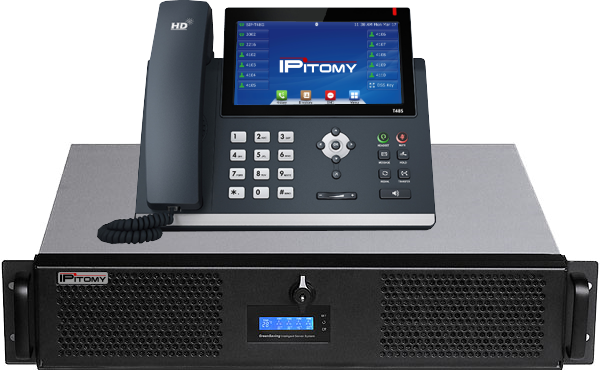
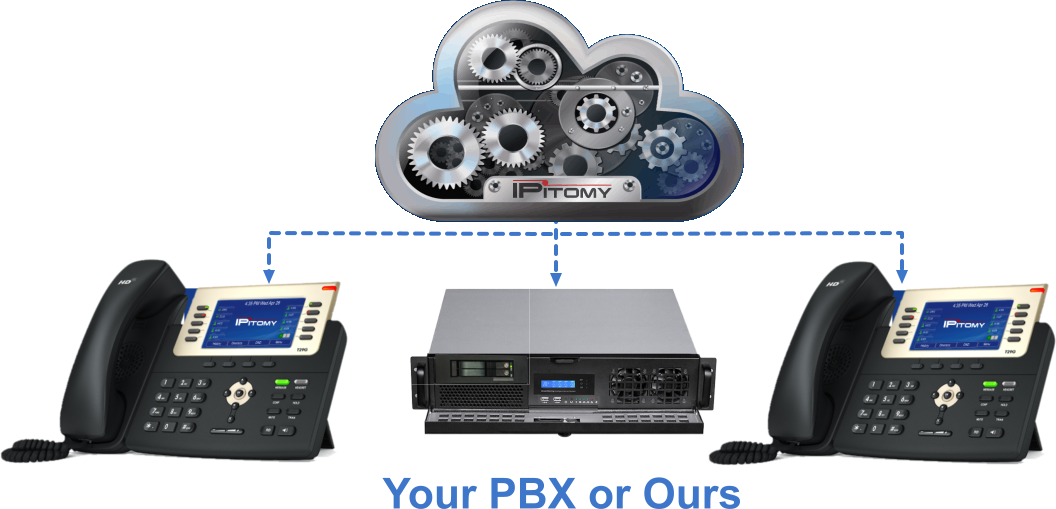
IPitomy Cloud PBX provides complete VoIP PBX features and services identical to our premise based systems with the advantage of being managed by IPitomy.

Total Peace of Mind in One Single Bill
IPitomy Phone System including 5 year warranty, support and unlimited calling for as little as $250/Mo.
VoIP
IPitomy SIP Trunking
On Any Phone System
IPitomy SIP Trunking can reduce your phone bill by 50% or more and improve quality.

Clarion Communications
|
 |
|
IMPORTANT NOTICE: |
|
| IPitomy - A Leader in VoIP | IPitomy SMS Text Mesaging | How to Choose a New Phone System |
VoIP Network Monitoring
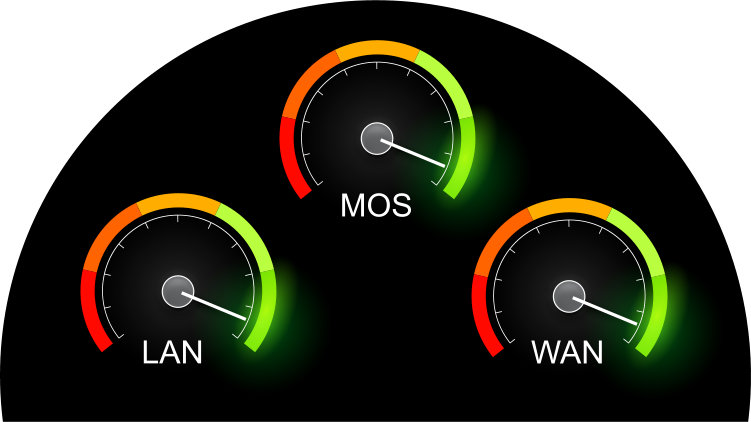
IPitomy's network monitoring provides around the clock peace of mind for your SIP Trunks and Hosted PBX. Enhanced routing and intellgence is built into every call. Redundancy and hardened cloud infrastructure is the best available.
 Save Up to 50% Per Month!
A Unique Package of VoIP Savings. IPitomy SIP trunks are designed to provide maximum utility at a price that is hard to beat. We are so confident you will like our service, that we offer a free trial.
ATLANTA, October 20, 2025 /PRNewswire/ -- Clarion Communications LLC ("Clarion") a leading cloud-based Unified Communications (UC) and Managed Service Provider (MSP) announced today that its IPitomy Communications LLC (“IPitomy”) subsidiary achieved third quarter 2025 revenue and sales booking growth, which were the best three-month period in the company’s history.
Revenue growth included an 11.4% increase compared to results from the third quarter of 2024 and a 3.0% increase compared to results from the second quarter of 2025.
Sales growth included a 36.0% increase compared to results from the third quarter of 2024 and a 3.8% increase compared to results from the second quarter of 2025. Also, the sales pipeline in the third quarter of 2025 expanded by 28% compared to the third quarter of 2024.
In addition to its record organic growth achievements, Clarion is in active discussions regarding acquisition opportunities as it seeks to enhance its growth trajectory. "Together, Clarion and IPitomy are uniquely positioned to acquire smaller UC / MSP operators affected by the changing network economics," said Clarion CEO, Vincent M. Oddo. "The IPitomy team looks forward to continuing its exceptional organic growth and closing more acquisition opportunities as we enhance our business together." said IPitomy CEO, Joseph Haines, Sr.
“Clarion and its predecessor companies have completed more than 30 acquisitions in the past 20+ years,” said Oddo. “We are aggressively pursuing M&A growth through tuck-in acquisitions in the highly fragmented UC / MSP industry.”
ATLANTA, February 10, 2025 /PRNewswire/ -- Clarion Communications, LLC ("Clarion") a leading cloud-based Unified Communications (UC) and Managed Service Provider (MSP) based in Atlanta, GA announced today that its IPitomy Communications (“IPitomy”) subsidiary signed an agreement to provide wholesale UC services to a U.S. based service provider. Additionally, Clarion is in active discussions regarding acquisition opportunities created by recent developments in the marketplace.
Recent consolidation in the UC network platform ecosystem has opened significant wholesale and acquisition opportunities for Clarion and IPitomy, which provides UC and MSP services to commercial customers throughout the U.S. IPitomy signed a wholesale agreement to provide UC services to a service provider located in the pacific northwest and Clarion is currently engaged in acquisition discussions with other service providers.
“We are in active acquisition discussions with several UC service providers, and we have a large funnel of additional wholesale UC service opportunities. We closed one wholesale service deal this month, and we anticipate closing more in 2025” said Clarion CEO, Vincent M. Oddo.
"Together, Clarion and IPitomy are uniquely positioned to either acquire or provide wholesale services to smaller operators affected by the changing UC network platform ecosystem," said Vincent M. Oddo, President, CEO & Director of Clarion. "The IPitomy team, managed by Joseph Haines, Sr. as President & CEO, looks forward to closing more of these opportunities and growing our business together."
“Clarion and its predecessor companies have completed more than 30 acquisitions in the past 20+ years,” said Oddo. “We are aggressively pursuing M&A growth through tuck-in acquisitions in this highly fragmented UC / MSP industry.”